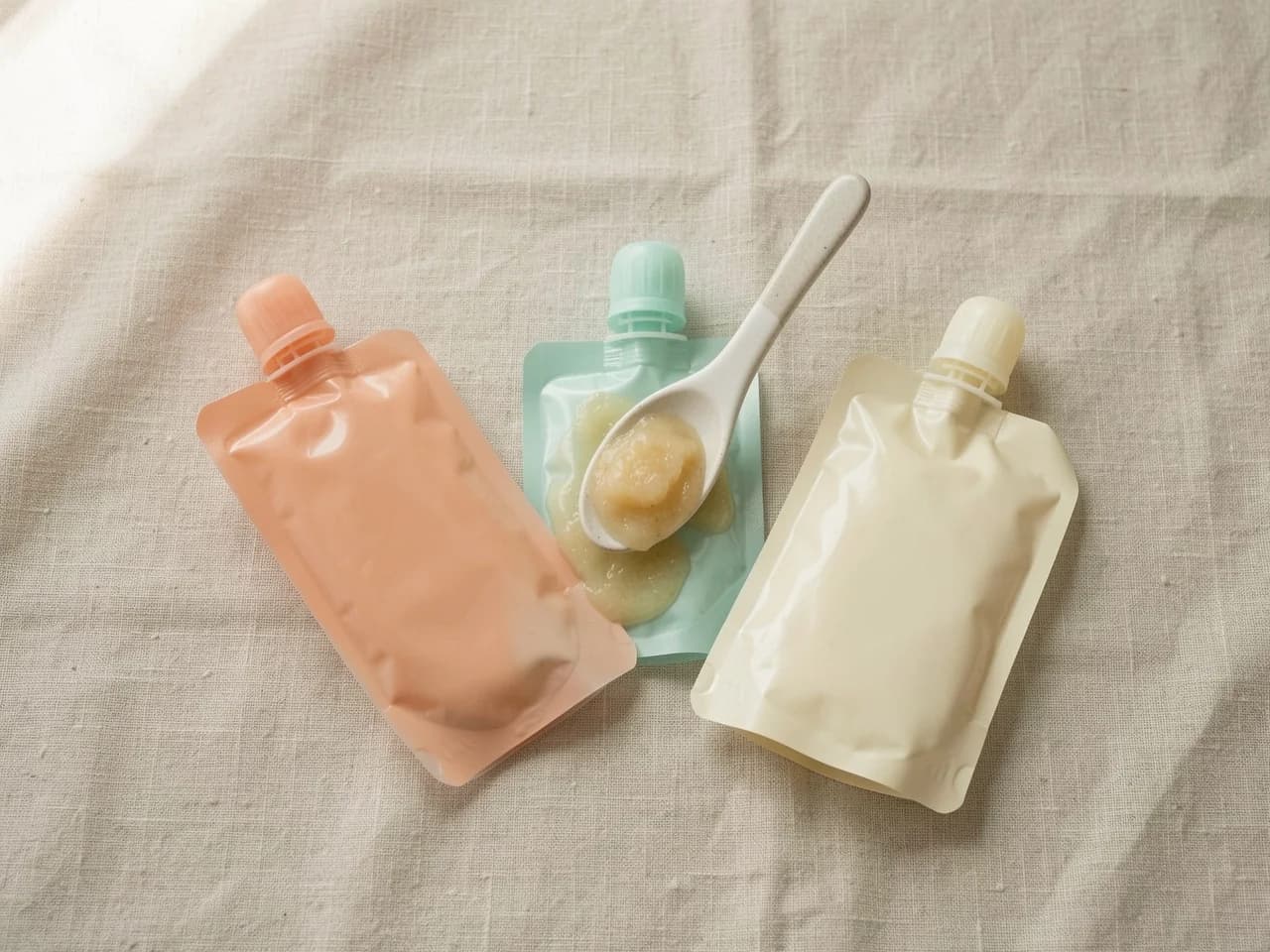
Greenpeace a publié un rapport en mai 2026 que les parents auront du mal à ignorer. L'enquête a testé 100 % des gourdes d'aliments pour bébés échantillonnées chez des distributeurs américains et a trouvé des particules de microplastiques dans chacune — entre 5 000 et plus de 11 000 particules par gourde, selon la marque. La contamination n'était pas dans l'aliment lorsqu'il a quitté la ligne de production. Elle était libérée dans l'aliment par la gourde plastique elle-même.
La réaction dans la presse alimentaire européenne a été rapide. Foodnavigator a relevé en quelques jours que les marques citées incluaient Nestlé et Danone, qui vendent toutes deux des aliments pour bébés en gourdes dans toute l'UE. En une quinzaine, la question réglementaire était passée des rayons des supermarchés américains aux boîtes mail de la Commission européenne.
Voici ce que l'étude a réellement mesuré, d'où viennent les particules, ce que disent actuellement les autorités, et comment l'aborder en tant que parent sans paniquer ni hausser les épaules.
Ce que l'étude de mai 2026 a trouvé
Greenpeace a testé des gourdes pour bébés de Gerber, Happy Baby Organics et de plusieurs autres marques, dont des gammes vendues par Nestlé et Danone. Nombres de particules par gourde :
- Gourdes Gerber : 5 000+ particules de microplastiques estimées par gourde, soit environ 54 particules par gramme d'aliment.
- Gourdes Happy Baby Organics : 11 000+ particules estimées par gourde, environ 99 particules par gramme.
- Chaque marque testée présentait une contamination mesurable. Les niveaux les plus bas se comptaient encore en centaines par gourde.
Pour mettre ces chiffres en perspective : les bébés à qui ces gourdes s'adressent en consomment généralement entre une et trois par jour. Une routine quotidienne de purée de fruits bio premium, au rythme recommandé, délivrait des milliers de particules de plastique à un système digestif en développement.
Les chercheurs ont utilisé un protocole d'extraction de microplastiques publié — l'aliment a été digéré dans une solution chimique qui décompose la matière organique, laissant les particules inorganiques à dénombrer. La même méthode a été utilisée dans des études antérieures sur les microplastiques dans les fruits de mer, l'eau et le sel. Ce n'est pas parfait, mais c'est la même mesure que la communauté de recherche plus large utilise.
D'où viennent les microplastiques
Le résultat le plus important n'était pas le nombre. C'était la source.
Les études antérieures sur la contamination par microplastiques laissaient souvent la source ambiguë — les particules dans les fruits de mer pouvaient plausiblement provenir d'eaux polluées, d'équipements de transformation, d'emballages ou de contamination croisée pendant la cuisson. L'étude sur les aliments pour bébés de 2026 a contrôlé ces voies en testant le contenu directement contre l'emballage.
La conclusion était sans équivoque : la contamination provient du revêtement intérieur de la gourde elle-même. Les gourdes sont du plastique flexible multicouche : une couche barrière externe, parfois une couche d'aluminium pour barrière à l'oxygène, et une couche interne de contact alimentaire généralement en polyéthylène ou en polypropylène. La couche de contact alimentaire libère des particules dans le contenu au fil du temps, le rythme augmentant sous l'effet de la chaleur, de l'acidité et de la pression d'écrasement — autant de conditions que les gourdes pour bébés rencontrent en routine entre le remplissage et la consommation par un enfant.
C'est important parce que c'est le type de résultat qu'il est difficile de contourner par l'ingénierie sans changer le format. L'emballage est la source.
À lire aussi : BPA et PFAS interdits : le tour de vis de l'UE 2026 sur les emballages — la réglementation européenne qui bouge déjà sur la chimie des emballages, mais qui ne couvre pas spécifiquement la libération de microplastiques.
Ce que cela signifie pour les aliments pour bébés en Europe
Nestlé et Danone sont le point de départ évident. Les deux entreprises vendent des aliments pour bébés en gourdes dans toute l'UE sous plusieurs sous-marques, et toutes deux ont réagi aux résultats Greenpeace par des déclarations soulignant la conformité à la réglementation actuelle — ce qui est vrai et quelque peu hors sujet, car aucune réglementation européenne actuelle ne limite spécifiquement la libération de microplastiques par les matériaux en contact avec les aliments.
Le Règlement européen sur les emballages et déchets d'emballages, applicable à partir du 12 août 2026, restreint les PFAS dans les emballages en contact alimentaire à certains seuils de concentration. Il ne traite pas de la libération de microplastiques. Les restrictions sur le BPA prévues par le Règlement (UE) 2024/3190 ciblent la chimie des perturbateurs endocriniens, mais là encore, pas la libération de particules.
C'est la lacune réglementaire que les résultats de 2026 rendent visible. L'EFSA a publié une page thématique sur les microplastiques dans les aliments reconnaissant les lacunes de données et s'engageant à un avis scientifique attendu en 2027. Jusqu'à ce que cet avis arrive et que la Commission agisse en conséquence, la libération de microplastiques par les emballages alimentaires reste dans la même catégorie réglementaire que l'effet cocktail des additifs avant les lignes directrices de l'EFSA sur l'effet de mélange en 2026 : un inconnu connu, avec des preuves croissantes, sans limite spécifique, et un processus réglementaire à rattraper.
L'image plus large : une analyse distincte de 2026 reprise par Food Chain Magazine a estimé que les emballages alimentaires introduisent environ 1 000 tonnes de microplastiques par an dans l'alimentation et les boissons européennes, soit une exposition individuelle moyenne d'environ 130 milligrammes par personne et par an. Les gourdes pour bébés représentent une petite fraction de ce total, mais une fraction significative de l'exposition par kilogramme d'un nourrisson.
Est-ce réellement dangereux pour les bébés ?
C'est là que la réponse honnête compte plus que le gros titre.
Ce que l'on sait : les microplastiques s'accumulent. Ils ont été retrouvés dans le sang humain, le placenta et le lait maternel dans des études des trois dernières années. Le résultat Greenpeace ajoute la prise alimentaire pendant la petite enfance comme voie d'exposition documentée.
Ce que l'on ne sait pas : les conséquences sanitaires d'une exposition prolongée à faible niveau durant le développement précoce. La recherche publiée sur les effets cardiovasculaires, immunitaires et métaboliques de l'exposition aux microplastiques est largement observationnelle et presque entièrement chez l'adulte. Aucun essai contrôlé ne pourrait être conduit éthiquement chez le nourrisson, et l'épidémiologie pertinente prendra des décennies. La revue bibliométrique 2026 dans Frontiers in Nutrition a trouvé un signal croissant pour des critères cardiovasculaires, métaboliques et inflammatoires chez l'adulte exposé, mais a noté explicitement que l'exposition précoce reste sous-étudiée.
Donc, le cadrage honnête pour les parents : la contamination est réelle, l'exposition est significative, les effets à long terme sont scientifiquement non tranchés. Ce n'est pas une réponse satisfaisante, et ce n'est pas non plus alarmiste. C'est où en sont les preuves actuellement.
Que peuvent faire les parents aujourd'hui ?
Quelques règles pratiques qui ne nécessitent pas d'action réglementaire :
- Réduire la fréquence des gourdes plutôt que les éliminer. La plupart des recommandations pédiatriques convergent vers « usage occasionnel de commodité » plutôt que « produit quotidien », ce qui abaisse à la fois l'exposition aux microplastiques et les préoccupations connexes sur la consommation de gourdes (densité de sucre, développement des compétences d'alimentation, régulation de la satiété) que les pédiatres soulèvent indépendamment.
- Privilégier les bocaux en verre pour les aliments pour bébés préparés. Le verre ne libère pas de microplastiques comme le font les gourdes plastiques. Les revêtements de couvercle peuvent avoir leurs propres préoccupations de chimie d'emballage, mais ils constituent une surface d'exposition bien plus petite.
- Éviter de chauffer la nourriture dans la gourde. Si vous devez la réchauffer, transvasez-la d'abord dans un bol. L'exposition à la chaleur augmente de façon constante la libération de particules dans la recherche plus large sur les plastiques au contact alimentaire.
- Les purées maison à partir de produits entiers éliminent complètement la question de l'exposition à l'emballage. Ce n'est pas toujours pratique, et cela ne doit pas être source de culpabilité si vous ne pouvez pas. Mais c'est la réponse la plus propre en matière d'emballage parmi celles disponibles.
- Ne pas pointer une seule marque. Toutes les gourdes testées en 2026 présentaient une contamination. La différence de 5 000 vs 11 000 particules entre marques est réelle, mais le seuil de bruit est suffisamment élevé pour que changer de marque dans le même format reste une variation marginale.
À lire aussi : Les émulsifiants dans l'alimentation : ce que dit vraiment la recherche — un autre exemple du même schéma, où la recherche avance plus vite que la réglementation et où les parents finissent par décider sans repères clairs.
Comment Nime traite les gourdes pour bébés
Dans la notation Nime, les gourdes pour bébés sont classées comme catégorie à risque d'exposition aux microplastiques plus élevé, au niveau de la catégorie et de l'emballage, en cohérence avec la recherche publiée et renforcée par les résultats de 2026. Le score reflète une exposition probable, pas une contamination mesurée en laboratoire — nous sommes explicites sur cette distinction sur la page méthodologie. Si l'avis EFSA attendu en 2027 produit des limites d'exposition spécifiques, la classification sera mise à jour pour refléter ce cadre. Jusque-là, le score fait ce qu'il peut avec la recherche qui existe.
Questions fréquentes
Dois-je arrêter complètement d'utiliser les gourdes pour bébés ?
C'est un choix personnel, et la recherche actuelle ne peut pas le faire à votre place. L'étude Greenpeace a trouvé une contamination par microplastiques dans chaque gourde testée, mais elle n'a pas mesuré les résultats sanitaires chez les bébés qui en ont consommé, et la recherche humaine plus large sur l'exposition aux microplastiques reste observationnelle. Le compromis pragmatique sur lequel la plupart des recommandations pédiatriques convergent : réserver les gourdes à un usage de commodité occasionnel plutôt qu'à un produit quotidien, et privilégier les bocaux en verre, la nourriture fraîchement préparée ou les contenants réutilisables lorsque c'est possible.
Les aliments pour bébés vendus dans l'UE sont-ils concernés par ces résultats ?
Oui — et probablement plus que les gros titres ne le laissent entendre. Les deux marques nommées dans l'enquête Greenpeace (Gerber et Happy Baby Organics) sont axées sur les États-Unis, mais Nestlé et Danone (toutes deux impliquées dans la couverture de Foodnavigator des mêmes résultats) vendent des aliments pour bébés en gourdes partout en Europe. La technologie d'emballage est similaire à l'échelle mondiale : des gourdes plastiques flexibles multicouches avec une couche interne en contact avec l'aliment. Aucune réglementation européenne actuelle ne limite spécifiquement la libération de microplastiques par les emballages alimentaires, indépendamment des restrictions plus larges sur les PFAS et le BPA prévues par le Règlement (UE) 2025/40.
Le fait de chauffer une gourde aggrave-t-il la libération de microplastiques ?
C'est plausible, et les recherches plus larges sur les microplastiques dans les emballages alimentaires suggèrent que la température compte. Certaines gourdes sont commercialisées comme passant au micro-ondes ; d'autres recommandent un réchauffage sous eau chaude. La recherche publiée n'a pas quantifié l'effet du chauffage spécifiquement pour les gourdes pour bébés, mais des travaux connexes sur les emballages plastiques (sachets de thé, contenants à emporter) constatent systématiquement que l'exposition à la chaleur augmente la libération de particules. La règle prudente si vous utilisez des gourdes : servir à température ambiante, ou transférer le contenu dans un bol séparé pour le réchauffer plutôt que de chauffer la gourde elle-même.
Les bocaux en verre ou la nourriture maison sont-ils réellement meilleurs ?
Les bocaux en verre ne libèrent pas de microplastiques dans l'aliment comme le font les gourdes plastiques — bien que les revêtements de couvercle puissent avoir leurs propres préoccupations de chimie d'emballage. Les purées maison à partir de produits entiers éliminent entièrement la question de l'exposition à l'emballage, mais en introduisent d'autres (fraîcheur, conservation au congélateur, temps). Il n'y a pas d'option parfaite. Ce qu'il y a, de plus en plus, c'est une différence significative entre les gourdes plastiques flexibles et les autres formats, et c'est cette différence que la recherche de 2026 rend visible.
Nime peut-il me dire combien de microplastiques se trouvent dans un produit pour bébé ?
Pas directement par produit, non — et nous sommes explicites à ce sujet dans notre méthodologie. L'exposition aux microplastiques dans le score Nime est une estimation au niveau de la catégorie et de l'emballage, basée sur la recherche publiée, et non une valeur de contamination mesurée en laboratoire par produit. Pour les gourdes pour bébés spécifiquement, Nime signalera la catégorie d'emballage comme à risque plus élevé, en accord avec les résultats de Greenpeace, mais ne pourra pas vous dire exactement combien de particules se trouvent dans un lot testé spécifique. L'étude de 2026 est précisément le type de preuve qui met à jour la classification sous-jacente.
Sources : Greenpeace International — communiqué sur les microplastiques dans les gourdes pour bébés, mai 2026 ; Greenpeace USA — rapport sur Gerber et Happy Baby Organics, mai 2026 ; Foodnavigator — couverture de l'implication de Nestlé et Danone, 22 mai 2026 ; page thématique EFSA sur les microplastiques et nanoplastiques dans les aliments ; revue bibliométrique Frontiers in Nutrition 2026 sur microplastiques et santé métabolique ; Food Chain Magazine sur les 1 000 tonnes de microplastiques issus des emballages, 2026 ; Règlement (UE) 2025/40 (PPWR) ; Règlement (UE) 2024/3190 (BPA dans les matériaux en contact avec les aliments).